The Empowering Women and Girls (EWG) project aims to achieve gender equality by equipping 75,000 women and girls with sustainable livelihood skills. This three-year initiative has been active in rural, remote, and disadvantaged communities in Bangladesh, Malawi, Mozambique, Pakistan, and Sri Lanka. Over the last three years, we have worked with implementing community partners to achieve pathways of education, empowerment and sustainability livelihoods for women and girls. As we enter our final year of funded project work, here are some of our key insights and lessons from the journey.
The Empowering Women and Girls (EWG) Project built on the foundations of previous Commonwealth of Learning projects, Open Schooling and GIRLS Inspire. Through these projects, we built partnerships with implementing communities parties and built holistic frameworks, project structures and partner relationships. Throughout our EWG project, we built partner capacity through online community of practices and direct knowledge, enabling successful approaches to be shared across contexts. These efforts paved the way for EWG to scale our work to reach 75,000 women and girls.
While the EWG applied a consistent holistic model to project work, it was also important to tailor the project efforts to the local context. For example, in Malawi, women and girls often walked between 2 and 18 kilometres to reach school, creating unique challenges for school attendance and completion. Combined with social norms, household responsibilities and safety concerns, these barriers meant that additional project activities around safety and mobile education were needed.
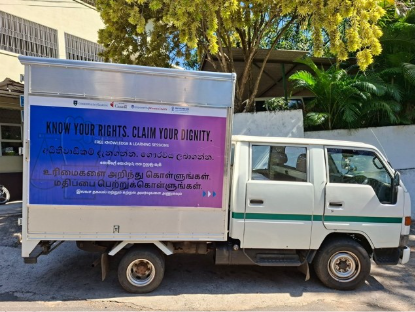
We recognised that bringing education closer to women and girls can help break down barriers in accessing learning. In Sri Lanka, the Walking School Initiative was introduced in remote and disaster-affected areas, using buses, equipped with mobile libraries, and Aptus devices to provide flexible access to education. These innovations were able to reach women and girls where a traditional classroom could not.
Beyond the direct trainings and activities or the project, we recognised that women and girls could access a number of other social programmes in their communities. Yet finding information on social programmes can be complex. With this challenge in mind, we launched the EWG Social Protection Mobile App. This app provides clear, easy-to-use information on available social protection programmes in the project countries, allowing users to filter opportunities based on their needs and access the information in the six languages of the project.
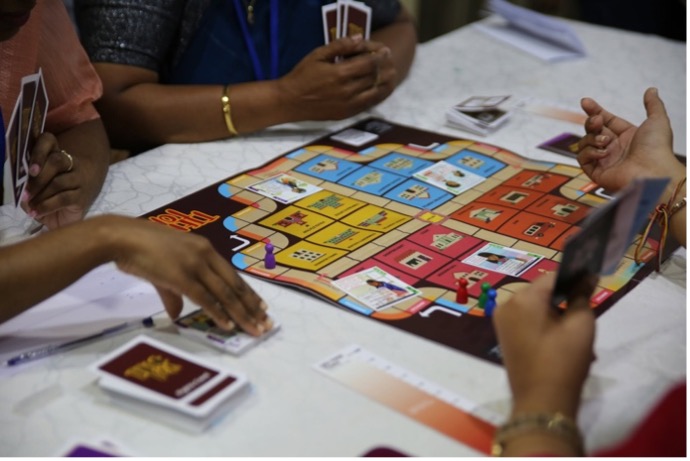
A significant pillar of our EWG project was working to change social norms around gender, and increase knowledge of women’s rights in the communities we work in. We developed, Tiene Toa, as both a board game and online computer game, to create engaging ways to learn about human rights and gender equality. Women and girls, community members and advocates can play together while exploring the importance of human and legal rights in advancing gender equality.
The EWG project approach included local awareness sessions, men and boys’ clubs and community groups to help shift gender norms and create more supportive environments for women and girls. Using the Gender Equitable Men (GEM) Scale, we measured changes in attitudes towards gender equality among men and boys in the project. Average scores increased from a baseline of 24 to 56.8 over the life of the project, demonstrating the effectiveness of these activities.
Strong partnerships with local organisations and government stakeholders helped ensure a shared understanding of our objectives and strengthened the sustainability of our work. Our EWG implementing partners built a network of over 130+ CSO and NGO organisations and government partners to sustain the work. We saw these efforts lead to direct change. In Pakistan, SPARC and Bedari worked alongside the ecosystem and government on advocating to end early marriage, resulting in the Child Marriage Restraint Act 2026 that offers greater protection to early marriage.
We recognise that climate change disproportionately affects women and girls and can exacerbate existing inequalities. Our country partners experienced climate-related shocks during the project, including extreme heat, cyclones and droughts. During these shocks, women and girls face increased household responsibilities while having fewer social safety nets during disasters and emergencies. For these reasons, climate change has been a cross-cutting focus throughout the EWG Project. To support climate resiliency, we launched the openly available Sustainable Climate Action & Resilient Food Systems Courses to build knowledge and skills. At the local level, we offered skills training on solar lantern building, composting and sustainable agriculture to build climate resiliency.
Inclusion of persons with disabilities was part of our project design from the outset. However, throughout the project we identified gaps in how we supported women and girls with disabilities. We learnt that community partners needed additional tools and guidance to better mainstream disability inclusion across project activities. To better support this work, we launched an in-depth study to better understand these challenges and strengthen our future programmes with more disability-inclusive approaches. We also launched a toolkit for community partners to support inclusive and accessibility advocacy.
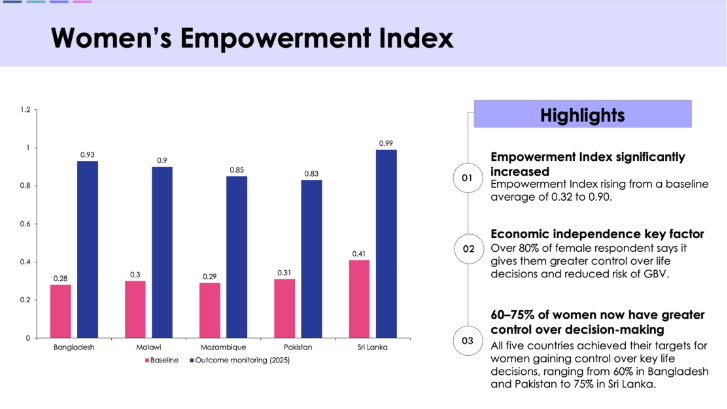
We invested in collecting long-term data to better understand the impact of the project. Using COL's Empowerment Index, we saw average empowerment scores increase from 0.32 to 0.90 over the lifespan of the project. We also found that 60 to 75% of women and girls reported greater control over household and personal decision-making.
As this chapter of the Empowering Women and Girls project enters its final stages, we are so grateful to our partners, community members and participants that have been part of the journey. We hope these lessons and momentum we have built will continue to shape efforts to empower women and girls globally.